


Featured article
19 October 2026
Australia’s ties with Asia are deepening while its Asia literacy has declined. Reversing that decline is essential to building stronger economic and strategic relationships across the region.

Peter Varghese
Peter Varghese

Latest articles

15 October 2026
Australia’s data centre boom will place new pressure on an already stretched electricity system. Requiring each project to add enough renewable supply to meet its demand would prevent that growth from increasing costs for other users or slowing the shift away from fossil fuels.
Mona Mashhadi Rajabi and Martina Linnenluecke
7 October 2026
Australia mines the minerals that power batteries but captures little of their value. A targeted push into processing, specialised manufacturing and recycling can change that.
Towfique Rahman and Sanjoy Paul
24 September 2026
This article explores how the Policy Insights Unit is building AI capability within the UK Government through an embedded consulting model that combines academic expertise, practical implementation support and ongoing collaboration with policymakers.
Lara Bate


Explore policy solutions for some of Australia’s biggest challenges

Explore recent articles

17 September 2026
Housing affordability is usually treated as a supply-side problem. But stronger anti-money-laundering enforcement could help reduce illicit demand and protect the integrity of Australia’s property market.
Hassan Gholipour Fereidouni

11 September 2026
Australia’s move away from a standalone AI Act is not a missed opportunity but rather a context-driven governance approach leveraging existing laws to address algorithmic harms. However, the success of such an approach hinges on the government's capacity to remain accountable to the standards it sets and to maintain responsive sectoral responses amid a changing landscape.
Amara Atif, David Waller and Dilek Cetindamar Kozanoglu
2 September 2026
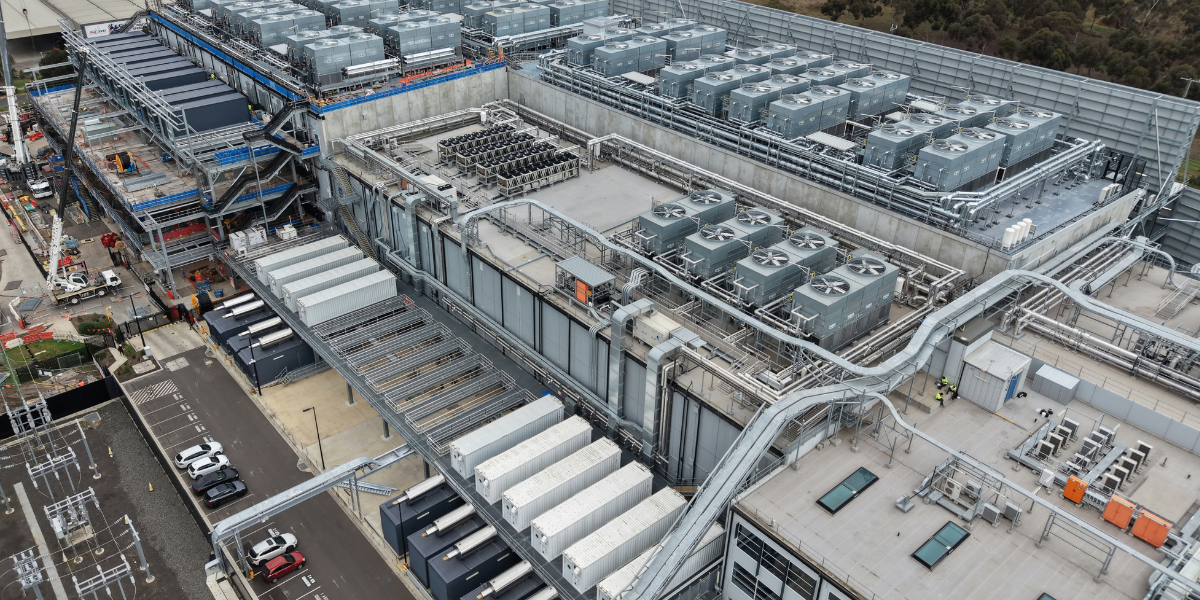
The choice is not between digital growth and climate responsibility. A national decarbonization pathway can expand Australia's data centre capacity while protecting energy and water security, communities and critical services.
Ehsan Noroozinejad Farsangi
Building a responsive, anticipatory approach to AI governance in Australia
Australia’s move away from a standalone AI Act is not a missed opportunity but rather a context-driven governance approach leveraging existing laws to address algorithmic harms. However, the success of such an approach hinges on the government's capacity to remain accountable to the standards it sets and to maintain responsive sectoral responses amid a changing landscape.
Australia’s data centre boom needs a decarbonisation pathway
The choice is not between digital growth and climate responsibility. A national decarbonization pathway can expand Australia's data centre capacity while protecting energy and water security, communities and critical services.

Industrial policy could foster healthy and sustainable food systems
Industrial policy in Australia could be strategically leveraged to address food system challenges by promoting health, sustainability, social equity and economic resilience through coordinated innovation and exnovation, infrastructure support for local small producers, improved labour conditions and coherent cross-sectoral policies.

Closing Australia’s energy efficiency gap: from rating labels to consumer purchasing
Australia’s long-standing Energy Rating Label is widely recognised but has been insufficient to overcome the affordability barrier, which prevents many consumers from purchasing energy-efficient appliances. The next step in promoting energy efficiency requires financial support measures, digital label integration, and enhanced practical energy literacy tools to enable effective consumer action informed by energy-efficiency knowledge.

Healthy communities require stronger local-state partnerships
Local governments play a critical role in addressing community health, wellbeing and climate challenges. Local government funding and more effective partnership between levels of government – through formalised agreements, capability-building and local knowledge integration – can create sustainable and effective programs for Australian communities.

A mission approach to building AI capability across the Australian Public Service
Australia’s approach to AI sovereignty should focus on operational capability rather than owning all AI technologies. The role of the new Chief AI Officers in the Australian Public Service can drive practical government AI adoption through shared missions, reusable capabilities and integrated safeguards, ensuring the country remains capable of selecting, adapting, governing and deploying AI to serve national priorities effectively and sustainably.

Social cohesion policy in Western Sydney: practical opportunities to embed sustainable solutions
Social cohesion relies as much on accessible institutional support and everyday interactions with government and other service providers as on shared values. To encourage social cohesion, government must look at the types of structures that are in place to support connection and bonding, including culturally responsive mental health services, community hubs and settlement policies that support intercultural exchange.

Supporting coordinated interventions through linked data for vulnerable youth
Children recorded as ‘missing’ from their out-of-home care placement are some of the most vulnerable in society. While their whereabouts are often unknown to their carers and caseworkers continue to interact with other public services, including hospitals, schools, police, homelessness services and justice systems. Linked administrative data can connect information across government agencies, revealing where children reappear and where opportunities exist for earlier and more coordinated intervention and support.

Building investor confidence in Australia’s Net Zero transition requires policy predictability
Australia’s transition to Net Zero requires credible and durable policy frameworks for investment in critical infrastructure. The Safeguard Mechanism, which reduces regulatory uncertainty and signals progressively tightening emissions baselines, can help encourage investment in industrial decarbonisation. Its effectiveness, however, depends on addressing offset integrity, electricity affordability and commercial readiness of low-emissions technologies.

A coordinated strategy to prevent falls and promote healthy ageing
Falls are one of the largest and most preventable drivers of hospitalisation, disability and loss of independence among older Australians. Despite decades of evidence demonstrating what works, Australia still lacks a coordinated strategy to prevent falls. As the population ages, the cost of inaction will continue to grow. NSW has an opportunity to take the lead and move from isolated programs to a coordinated approach to falls prevention.