


Data centres should proceed only with additional renewable capacity


Australia’s data centre boom will place new pressure on an already stretched electricity system. Requiring each project to add enough renewable supply to meet its demand would prevent that growth from increasing costs for other users or slowing the shift away from fossil fuels.
Data centres should proceed only with additional renewable capacity
Australia’s data centre boom will place new pressure on an already stretched electricity system. Requiring each project to add enough renewable supply to meet its demand would prevent that growth from increasing costs for other users or slowing the shift away from fossil fuels.
ByMona Mashhadi Rajabi and Martina Linnenluecke
15 October 2026
Australia should make renewable electricity capacity a non-negotiable condition of new data centre development. Every project should provide a binding, independently verified plan showing how new generation, storage and grid capacity will meet its full operating demand. This infrastructure must be operational before the data centre begins drawing power. If sufficient renewable supply cannot be secured, the project should not proceed.
Data centres often run around the clock and require highly reliable power. AEMO identifies them as among the fastest growing sources of electricity demand in Australia’s major electricity markets. If this demand arrives before new supply, households and other businesses risk higher costs and a more constrained electricity system. Expanding AI infrastructure should not take priority over affordable electricity or Australia’s decarbonisation commitments.
Building a data centre involves long-term decisions about land, grid connections and supporting infrastructure. Governments should assess proposals against their effects on the wider electricity system and the communities hosting them. Announced investment is not, by itself, evidence of a public benefit.
Making renewable capacity a condition of approval
Policy is starting to recognise this problem. The Commonwealth’s March 2026 expectations call for additional clean generation or storage. Its September consultation proposes mandatory standards and a renewable electricity obligation. Victoria has also announced requirements for new data centres to bring their own renewable supply and storage. These measures need enforceable tests of what capacity is added, when it becomes available and who pays.
The federal consultation nevertheless considers allowing certificates from existing generation initially, with requirements for new capacity increasing over time. This would allow electricity demand to arrive before the additional renewable supply intended to support it, increasing routine reliance on coal and gas in the interim. Rather than weakening the requirement during a transition period, governments should delay the associated data centre load until the necessary new supply is available.
Long-term power purchase agreements can help secure financing for new wind and solar farms, but they do not necessarily show that renewable power will be available when a facility needs it. Purchasing certificates or matching annual electricity use with renewable generation can still leave gaps between supply and demand. The International Energy Agency therefore distinguishes annual matching from matching demand and supply hour by hour. Approval conditions should require evidence that operators are enabling additional supply when and where it is needed, with safeguards against double counting.
Renewable electricity must also be deliverable through the relevant network. Developers should demonstrate how generation, storage and flexible demand can meet their operating needs, including overnight and during prolonged periods of low wind and solar output. Procurement should be assessed against hourly demand and local network constraints. Emergency fossil-fuel backup should be tightly limited and publicly reported. Routine operation should not depend on new fossil-fuel generation or extended coal-plant lifetimes.
Approval conditions must protect the wider electricity system
These requirements must be tested before approval and translated into enforceable conditions governing when each development stage can operate. Developers should disclose expected consumption, supply contracts and infrastructure delivery schedules, while an independent assessment confirms that the required capacity is funded and deliverable. If an energy project is delayed, the associated data centre load must also wait. Ongoing reporting and penalties should be backed by powers to restrict operations when conditions are breached.
Location-based incentives could help guide investment towards suitable regions, but renewable potential alone is insufficient. Reliable grid connections, water, telecommunications and other supporting infrastructure must also be available. Approval should depend on demonstrable capacity to accommodate the development without undermining existing users or environmental limits. A promised transmission upgrade or an unbuilt renewable project should not be treated as available capacity.
Operators should pay for the additional connections, network upgrades and system services their projects require. The IEA warns that poorly allocated system costs can fall on other electricity users. Governments should also scrutinise claims about regional benefits by distinguishing temporary construction activity from ongoing employment and local business opportunities. Communities should have a meaningful role in decisions affecting their land and resources. Renewable supply should therefore be treated as one necessary condition for approval, alongside water security and demonstrable community benefits.
This approach may delay, reduce or rule out some developments. Governments should accept that consequence where a project cannot meet these conditions. Australia can build a stronger digital economy, but its growth must stay within the renewable capacity and infrastructure available to support it.
Mona Mashhadi Rajabi is a Lecturer in Business Analytics at the UTS School of Accounting and Finance and the Decarbonisation Stream Lead at the Centre for Climate Risk and Resilience.
Martina Linnenluecke is Professor of Environmental Finance at the UTS School of Accounting and Finance and Director of the Centre for Climate Risk and Resilience.
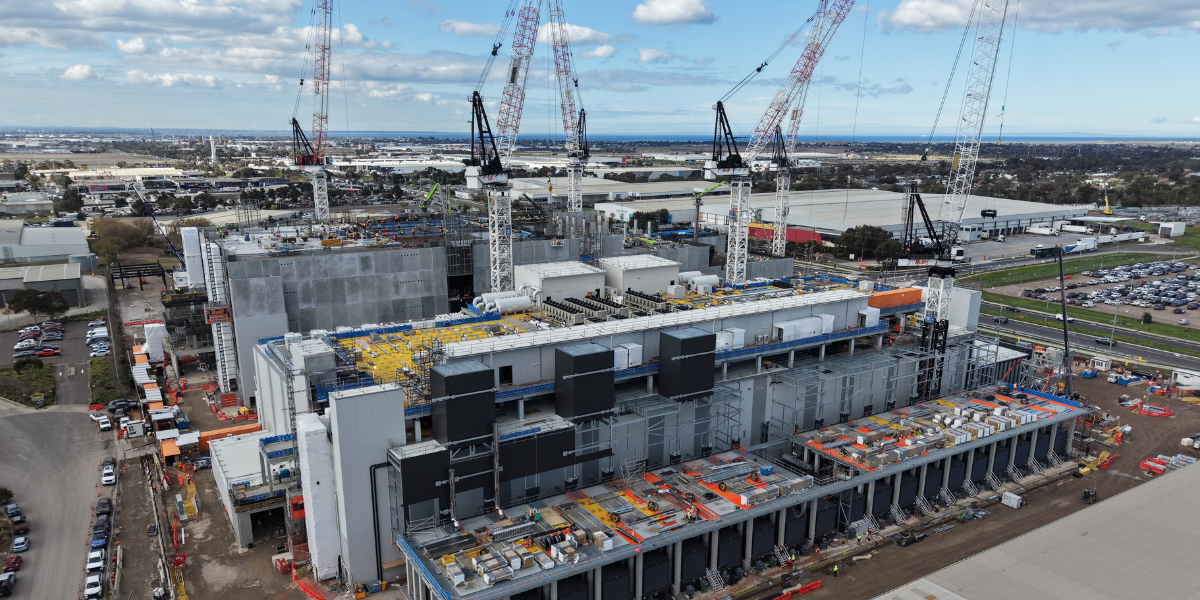
Image credit: iStock #2289706861
Features
Amara Atif, David Waller and Dilek Cetindamar Kozanoglu
Ehsan Noroozinejad Farsangi
Sabrina Chakori, Anne-Marie Thow and Roy Green
Explore more articles

Unyapan Thongpanchang, Bahareh Berenjforoush Azar and Sancheeta Pugalia


Features
Amara Atif, David Waller and Dilek Cetindamar Kozanoglu
Ehsan Noroozinejad Farsangi
Sabrina Chakori, Anne-Marie Thow and Roy Green
Subscribe to The Policymaker
Explore more articles
-
Unyapan Thongpanchang, Bahareh Berenjforoush Azar and Sancheeta Pugalia
Subscribe to The Policymaker