


The threat beneath Australia’s cotton fields is invisible, but its consequences won’t be

Australia’s cotton industry faces growing pressure from soil-borne disease. Plant microbiome research offers a more sustainable response, but taking it from lab to farm requires coordinated field trials and clearer regulatory pathways, backed by practical support for growers.
The threat beneath Australia’s cotton fields is invisible, but its consequences won’t be
Australia’s cotton industry faces growing pressure from soil-borne disease. Plant microbiome research offers a more sustainable response, but taking it from lab to farm requires coordinated field trials and clearer regulatory pathways, backed by practical support for growers.
ByAqsa Hafeez
2 November 2026
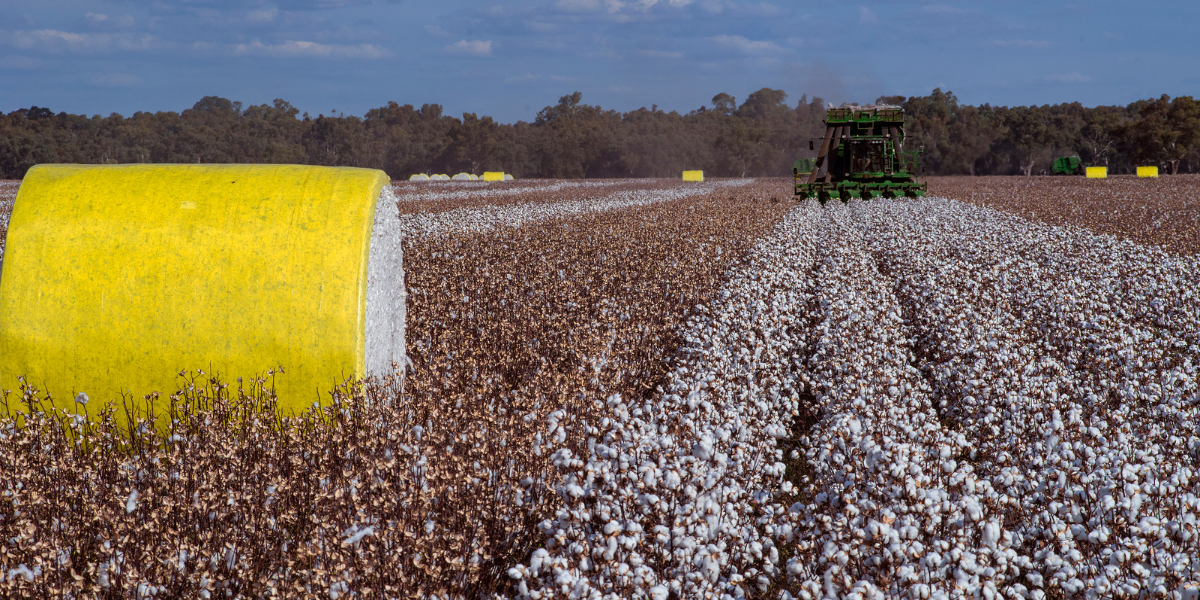
Walk across a healthy-looking cotton farm in Australia and you might see nothing wrong. Crops stand tall, irrigation runs efficiently and production appears stable. But beneath the surface, a quiet crisis is unfolding that threatens the industry’s future at risk.
Soil-borne diseases, including Verticillium wilt, are rising across key cotton regions, reducing yields, harming profitability and costing farmers millions each year. Verticillium wilt incidence has continued to increase in recent years, and the 2023-24 NSW disease survey found it in every surveyed field in the Namoi Valley. While the industry continues to grapple with developing effective management tactics for these wilts, yield losses can reach 10 to 62 per cent in some affected fields, and it costs Australian agriculture millions of dollars each year. This is not just an agricultural challenge: it is a policy blind spot.
For decades, Australia’s approach to crop disease has relied heavily on chemicals. Fungicides and other treatments have been the first line of defence, helping farmers manage risk and maintain productivity. But this model is under strain. No Australian cropping region is free of fungicide resistance. Heavy pesticide use also carries environmental risks, with about 31 per cent of global agricultural land is at high risk of pesticide pollution. The result is a system that is increasingly vulnerable.
Agriculture underpins regional communities and contributes billions of dollars in exports. Cotton alone contributed around $3 billion to the Australian economy in 2024 and supports about 250 regional communities. When soil health declines and disease pressure rises, the impacts ripple far beyond the farm gate. Yet policy has struggled to keep pace with the emerging science.
Incremental improvements to chemicals and crop varieties remain important, but they will not be enough on their own. Australia also needs a coordinated approach to developing microbiome-based tools that can move from laboratory research to practical farm use.
Harnessing the plant microbiome
Plants live in close association with vast microbial communities in the soil, including bacteria, fungi and other organisms that influence plant health. These communities are not random. Plants actively interact with them, releasing chemical signals to attract beneficial microbes, particularly under disease or environmental stress. In simple terms, plants can “call for help”.
These microbes can suppress harmful pathogens, enhance nutrient uptake and strengthen plant resilience. Emerging research suggests that in cotton, these interactions could be harnessed to manage diseases such as Verticillium wilt. In one glasshouse study, a synthetic community of seed bacteria reduced Verticillium wilt in cotton seedlings by about two-thirds. Researchers are identifying the root metabolites and microbes linked to disease suppression and combining them into synthetic microbial communities (SynComs). The aim is practical, on-farm solutions.
This approach could change how soil-borne diseases are managed. Rather than relying solely on chemicals, farmers could work with natural biological systems to protect crops. Microbiome-based solutions may be more sustainable and adaptable to changing environmental conditions. In field trials, researchers have linked lower Verticillium wilt incidence to specific soil microbes and rebuilt them as a synthetic community. Because they may be delivered through seed treatments and irrigation, these tools could fit within existing farming practices, making adoption easier. If further field validation confirms their effectiveness at scale, they could improve productivity while reducing environmental impacts, offering a rare win-win.
The policy gap
Australia already has a national framework for soil. The National Soil Strategy is being delivered through the National Soil Action Plan 2023 to 2028. The plan commits governments to better soil measurement, supportive policy, faster adoption of good practice and a stronger soil workforce. Under the National Soil Monitoring Program, CSIRO is sampling about 3,000 sites to track agreed soil health indicators. The Soil CRC is working toward more efficient microbial inoculation in soil. Beyond cotton, AgriFutures Australia manages research for 13 levied rural industries and runs a cross-sector investment stream covering national challenges and emerging industries. Soil-borne disease is not a cotton-only problem, so a translation pipeline proven in cotton could be extended through that stream rather than rebuilt industry by industry. AgriFutures also operates growAG, the national platform that surfaces agrifood research and technology to industry and investors. In cotton, the Cotton Research and Development Corporation (CRDC) already funds wilt surveillance and research on beneficial rhizosphere microbes.
These programs lay important foundations. They support soil monitoring, research and innovation. However, Australia needs a clearer, more coordinated pathway for taking disease-suppressive microbial products through field validation, registration and grower adoption. That translation pipeline is where the gap lies. Efforts remain fragmented and localised, with limited coordinated action between universities, industry and government, leaving promising discoveries in laboratories rather than in the hands of growers.
The Australian Pesticides and Veterinary Medicines Authority already regulates microbial agents as biological agricultural products and has its own data requirements. Products that combine several microbial strains with plant metabolites, such as SynComs, may not fit neatly within these categories. Greater regulatory clarity could encourage investment and innovation while ensuring that new products are assessed appropriately. Growers also need trusted information, practical support and evidence from field trials before adopting approaches that may require upfront investment.
A policy roadmap for action
Securing the future of Australian cotton requires a practical, targeted policy response across five priorities:
- Build a microbiome translation pipeline through existing institutions. It fits within the National Agricultural Innovation Agenda, whose national priorities include climate resilience and leadership in responding to pests and diseases. CRDC could lead the pipeline, co-investing with other research and development corporations through, for example, Agriculture Innovation Australia and drawing on the Soil CRC and universities. The new element is coordination. Projects should translate directly to farm-ready solutions, such as SynComs and metabolite-based disease management tools.
- Clarify regulatory pathways. The Australian Pesticides and Veterinary Medicines Authority could issue specific guidance for multistrain and metabolite-based products, building on its existing data requirements for microbial agents. Streamlined pathways for low-risk microbial products could encourage investment, support innovation, and speed deployment to farms.
- Strengthen research-industry partnerships. Collaborative platforms connecting scientists, agribusinesses and growers should coordinate product development, multilocation field testing and grower feedback. This can help ensure solutions are practical, scalable and adapted to diverse soils, cultivars and management practices while generating the evidence needed for regulatory assessment and adoption.
Emerging technology could make this testing affordable. Verticillium wilt is currently assessed by walking fields and counting symptomatic plants, which limits how many sites can be monitored. CRDC has already trialled low-cost drones for mapping wilt in cotton, and recent work combining drone-mounted hyperspectral imaging with machine learning has classified wilt at canopy scale with above 90 per cent accuracy in late-season crops. Accuracy falls to around 60 per cent before symptoms appear, so these tools supplement rather than replace ground assessment. Even so, they would let a small number of research teams measure disease across many more plots and sites, which is precisely the constraint on generating field evidence at the scale regulators and growers require. - Support farmers in adoption. Transitioning to microbiome-based systems requires training, confidence and resources. Delivery can build on networks that already reach growers. CottonInfo could host demonstration trials, while Sustainable Agriculture Facilitators, Regional Soil Coordinators and state agriculture agencies could help share evidence and monitor disease outcomes. State agencies such as the NSW Department of Primary Industries and Regional Development already run annual cotton disease surveys, providing an existing platform for this work. Incentives for early adopters could be piloted under the Action Plan’s adoption priority. Growers are more likely to adopt solutions they see working in environments like their own.
- Invest in education and knowledge-sharing. Understanding plant-soil-microbe interactions requires a shift in thinking. Accessible, evidence-based guidance for growers, advisors and policymakers is essential. Field days, masterclasses and industry engagement can build knowledge and capacity. Soil biology modules could also be added to “Cotton Australia’s myBMP program”.
Benefits of action
These actions could deliver multiple benefits across key areas, including:
- Economic: If field trials confirm that microbial tools reduce disease losses, farm profitability could improve. Over time, this could support regional economies and Australia’s competitiveness in global cotton markets.
- Environmental: Where microbial tools replace some chemical inputs, they could reduce pesticide loads in soils and waterways. This would lower risks to non-target organisms and human health.
- Social: More profitable and resilient farms could, in turn, help sustain the regional communities that depend on them.
These benefits will depend on whether microbial tools can be shown to work reliably under field conditions and delivered at a cost and scale that makes sense for growers. Research is now building the evidence base for this policy agenda.
The cost of inaction would extend beyond lost productivity, threatening the long-term viability of Australian cotton production, environmental health and regional livelihoods. NSW projections suggest that cotton in northern NSW may be particularly affected by Verticillium wilt by 2050, creating greater uncertainty for growers.
A call to action
Australia has the research capability, agricultural expertise and emerging innovations to address this challenge. What is needed now is a coordinated policy pathway that bridges scientific discovery, regulatory assessment and on-farm implementation. Acting now would help secure the cotton industry, protect the environment and position Australia as a global leader in sustainable agriculture.
The future of Australian cotton will depend on more than what growers add to the soil. It will also depend on whether research, regulation and industry support enable them to understand and work with the biological systems already there.
This article was one of three finalists in the 2026 James Martin Policy Pitch essay competition, which invites higher-degree-by-research students from APPI partner universities to showcase innovative policy solutions to major challenges facing Australia.
Aqsa Hafeez is a PhD student at the Hawkesbury Institute for the Environment, Western Sydney University, which supports her PhD together with the Cotton Research and Development Corporation (CRDC).
Image credit: Canva
Features
Peter Varghese
Mona Mashhadi Rajabi and Martina Linnenluecke
Towfique Rahman and Sanjoy Paul
Explore more articles

Hassan Gholipour Fereidouni


Features
Peter Varghese
Mona Mashhadi Rajabi and Martina Linnenluecke
Towfique Rahman and Sanjoy Paul
Subscribe to The Policymaker
Explore more articles
-
Hassan Gholipour Fereidouni
Subscribe to The Policymaker